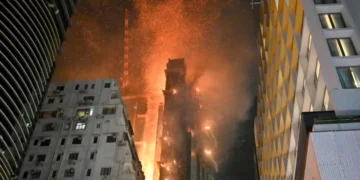


On November 26, 2025, a massive fire broke out at the Wang Fuk Court residential complex in the Tai Po district of Hong Kong. The blaze rapidly engulfed seven of the eight high rise towers undergoing renovation leaving a trail of destruction that became Hong Kong’s deadliest residential fire in decades.
As of early December, the confirmed death toll stands at 151 people, with dozens more still missing and many injured.
Authorities believe the fire’s rapid spread was vastly worsened by a series of fire safety failures discovered in the building’s renovation materials and safety systems:
-
The protective mesh netting wrapped around the exterior scaffolding failed flame resistance tests. At least 7 out of 20 samples collected from the site did not meet fire retardant standards.
-
Renovation used flammable foam insulation and plastic netting, which acted like accelerants, enabling the fire to burst from floor to floor in minutes.
-
Multiple reports indicate that fire alarms failed to trigger when the fire began, giving residents little to no warning as flames spread upward.
These findings have escalated calls for accountability and a full review of building-safety and renovation-standards compliance in Hong Kong.
Arrests and Official Response
Since the fire, authorities have arrested a total of 13–14 people. The suspects include construction-company directors, consultants, and contractors involved in the renovation works at Wang Fuk Court. They are now being investigated on suspicion of manslaughter, negligence, and corruption.
In response to public outrage and the scale of the tragedy, the region’s Chief Executive, John Lee, announced the formation of a judge led independent commission to investigate the causes of the blaze, examine oversight failures, and recommend systemic reforms to prevent similar disasters in future.
Hong Kong authorities have already suspended multiple renovation projects tied to the same contractor, and begun city wide reviews of renovation practices, scaffolding usage, and building-material compliance.
Lives Lost, Homes Destroyed, and a City in Mourning
More than 4,600 residents lived in the eight-tower estate before the blaze. Thousands are now displaced. In addition to human casualties, reports say over 60 pets died, and many belongings, documents, and personal histories have been lost forever. Hong Kong declared a multi-day mourning period, with vigils held across the city and abroad as grief and anger sweep through communities.
Critics say the fire reflects deeper systemic failures in regulation, building standards, and public-safety governance. The independent inquiry and arrests are seen as a first step but many worry that without major structural changes, similar incidents could recur.
What the Investigation Could Mean for Hong Kong
The independent commission is expected to take several weeks (to months) to complete its investigation and publish findings. Key areas of focus: use of substandard materials, renovation approval processes, and fire safety compliance across public housing projects.
Suspended renovation projects may be cancelled permanently, especially those linked to non-compliant contractors. A city wide audit of high rise residential buildings currently under renovation focusing on scaffolding safety, fire proofing, alarm systems, and evacuation plans.
Public pressure may force regulatory reforms, stricter penalties, and enforcement mechanisms potentially reshaping how Hong Kong handles building safety and urban renovation.


